Bonded for Life: The Real Reason Your McCallsburg Friendships Hit Different
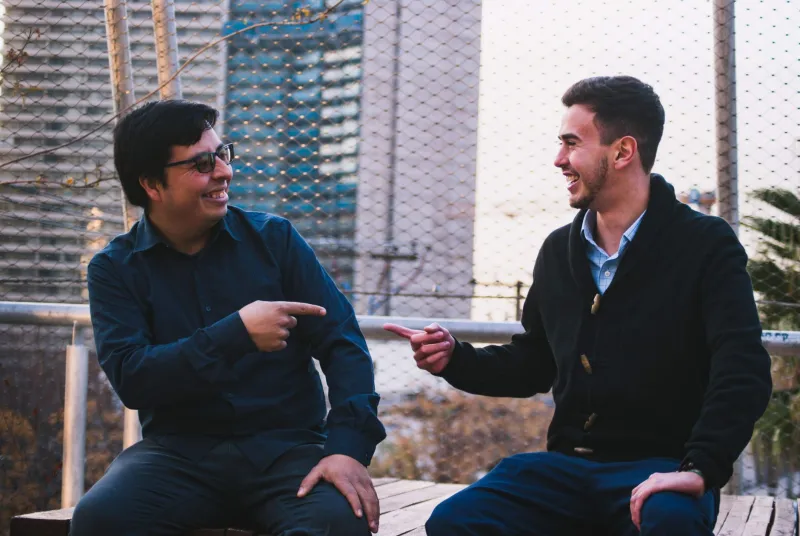
You've probably noticed it yourself. You move away for college, land a job in Des Moines or Chicago, and start collecting new acquaintances like business cards. They're perfectly nice people. You grab coffee, swap texts, maybe make it to a birthday party or two. But somewhere in the back of your mind, you're comparing every single one of them to the friendships you made back in McCallsburg — and they keep coming up short.
That's not nostalgia talking. That's something real.
Social researchers have been quietly building a case for what many small-town residents have known intuitively for generations: the size of your community shapes the depth of your relationships in ways that are measurable, lasting, and surprisingly scientific.
The Dunbar Number — and Why McCallsburg Nails It
Back in the 1990s, British anthropologist Robin Dunbar proposed that human beings are cognitively wired to maintain a stable social group of around 150 people. Go much beyond that, the theory goes, and meaningful relationships start to thin out. You simply can't invest enough mental bandwidth in everyone.
McCallsburg, with its population hovering just above 1,300, is obviously larger than 150 — but here's the interesting part. Within a town that size, most residents naturally cluster into overlapping social circles: school families, church groups, farming neighbors, the folks you see every Friday night at the local game. Those circles tend to cap out right around Dunbar's magic number.
In a city of half a million, your 150-person social world is essentially invisible to everyone else. In McCallsburg, those 150 people are the town. Your friend group and your community are the same thing. That overlap creates something researchers call "social density" — a concentration of shared context that supercharges the bonding process.
Shared Witnesses to Your Whole Life
Ask anyone who grew up here what makes their oldest friendships feel different, and you'll hear some version of the same answer: they were there.
Terry Halverson, who graduated from South Hamilton High School in 1987 and still farms land just outside of McCallsburg, put it plainly when we caught up with him at the grain elevator last spring. "My buddy Dale and I have been friends since second grade. He was at my dad's funeral. I was at his wedding. We don't have to explain ourselves to each other because we've just... seen it all happen."
That kind of longitudinal witness — being present across the full arc of someone's life — is extraordinarily rare in urban environments, where people move in and out of neighborhoods every few years. Psychologists call this "relationship history depth," and studies consistently show it's one of the strongest predictors of friendship durability.
In a small town, you don't just know your friend. You know their parents, their siblings, their old heartbreaks, their proudest moments. You've watched them grow up. That accumulated context acts like emotional infrastructure — when things get hard, there's a whole load-bearing history holding the relationship up.
The Accountability Factor
Here's something nobody in a small town needs a researcher to explain: you're going to see these people again. Probably tomorrow.
In cities, social relationships carry a kind of low-stakes anonymity. Drift apart from someone, and the odds of an awkward run-in at the grocery store are pretty slim. In McCallsburg, there is no drifting. There's the Casey's, the post office, the school pickup line, the Friday night bleachers. Social accountability is baked into the geography.
This might sound like pressure — and sometimes it is — but researchers at the University of Michigan found that communities with high rates of "repeated unplanned contact" (essentially, bumping into each other constantly) show significantly stronger long-term social cohesion. The friction of unavoidability, it turns out, is also the glue.
When you know you'll see someone again, you tend to invest more carefully in how you leave things. Conflicts get worked out. Grudges are harder to sustain. Repairs happen.
What the Research Actually Says About Community Size and Connection
A 2019 study published in the journal Social Networks found that residents of smaller communities reported higher levels of "relationship satisfaction" and "perceived social support" than their urban counterparts — even when controlling for income, education, and personality type.
Another study out of Harvard's Human Flourishing Program identified "community embeddedness" — how woven into the social fabric of a place you feel — as one of the top predictors of long-term wellbeing and life satisfaction. Towns where everyone knows your name aren't just a Cheers punchline. They're actually producing measurably happier, more connected people.
And a 2022 analysis from the American Sociological Review noted something particularly striking: adults who grew up in small communities were significantly more likely to maintain friendships from childhood into their 50s and 60s, compared to those who grew up in cities. The relationships forged early in small-town life appear to have exceptional staying power.
The McCallsburg Variable
What makes McCallsburg a particularly interesting case study isn't just its size — it's the combination of geographic stability, multigenerational presence, and a culture that genuinely values showing up for each other.
Families here have roots that go back decades. The same last names appear on the 1970 school photo and the 2024 honor roll. When someone has a baby, people bring casseroles. When someone loses a job or a loved one, the community doesn't just send thoughts — it shows up with time and labor.
Lisa Crandall, who left McCallsburg for fifteen years before returning in her late thirties, described reconnecting with old friends as "picking up a conversation that never really ended." She laughed when she said it, but she also meant it. "I have friendships in Chicago that I worked really hard at for years. And then I came back here and it was like... oh. This is what friendship is supposed to feel like."
What This Means for You
If you're reading this from McCallsburg, maybe you already feel all of this in your bones and just never had the language for it. Your friendships here aren't accidents. They're the product of a specific environment — one that creates conditions for deep, lasting human connection almost automatically.
If you've moved away and find yourself missing something you can't quite name, this might be it. Not just the town itself, but the particular quality of relationship that small-town life makes possible.
And if you're someone who's been on the fence about investing more in your local connections — the neighbor you always mean to check in on, the old classmate you keep saying you'll call — maybe this is the nudge.
The science is pretty clear. The best friendships of your life might already be living within five miles of where you're sitting right now.
Know a McCallsburg friendship that's stood the test of time? We'd love to hear about it. Drop us a message at mccallsburg.com.