Why McCallsburg Locals Keep Coming Back: The Loyalty Loop That Big Retailers Can't Buy
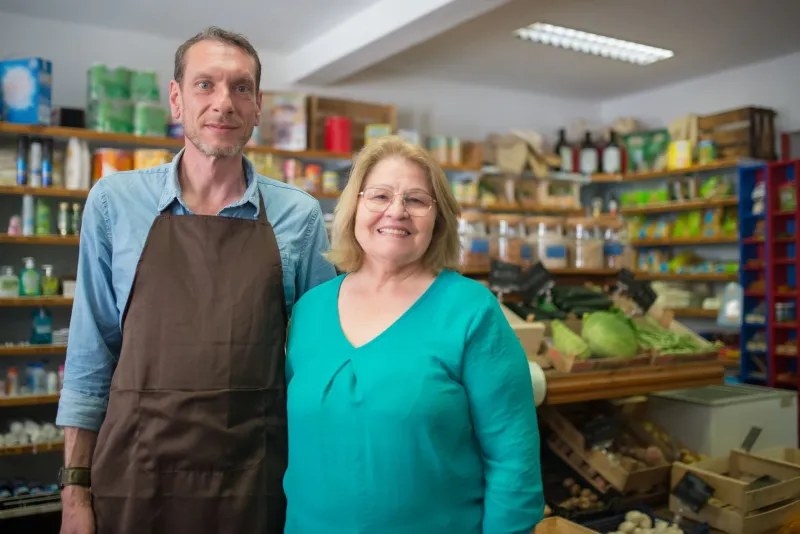
Walk into almost any locally owned business in McCallsburg on a weekday morning and you'll notice something that doesn't happen at a big-box store in Ames or a chain shop off the interstate: the owner probably knows your name. Maybe your kids' names, too. Possibly your order before you've even opened your mouth.
That kind of familiarity isn't a marketing strategy. It's just how things work here. And as it turns out, it's also one of the most powerful forms of customer retention that exists — even if nobody in town would ever call it that.
More Than a Transaction
Talk to anyone who's been shopping local in McCallsburg for more than a few years and the word that keeps coming up isn't "convenient" or "affordable." It's trust.
Diane Kowalczyk has been picking up her baked goods and specialty pantry items from the same local shop for going on eleven years. She could easily swing by a larger grocery chain on her way back from Des Moines. She doesn't.
"I know where that money goes," she says simply. "It goes to a family I know. It goes back into this town. That matters to me more than saving a couple of bucks."
That sentiment echoes across McCallsburg in ways that might surprise economists trained on purely rational consumer behavior. The traditional model says people buy based on price and convenience. Small towns like this one quietly challenge that assumption every single day.
The Psychology Behind the Loyalty
Researchers who study rural commerce have long noted that small-town shopping patterns diverge significantly from urban ones — and not just because there are fewer options. The difference runs deeper than that.
In a community where roughly 1,300 people share the same roads, the same schools, and often the same last names on the cemetery headstones, commerce becomes personal in a way that's almost impossible to engineer artificially. When you buy a tool from a local hardware dealer, you might run into him coaching your kid's baseball team that Saturday. When the woman who does your taxes also volunteers at the same church potluck you attend, the relationship has layers that no loyalty points program could ever replicate.
Psychologists call this "social embeddedness" — the idea that economic decisions don't happen in a vacuum but are tangled up with relationships, reputation, and a sense of mutual obligation. In McCallsburg, that embeddedness is essentially baked into daily life.
"You can't be anonymous here," laughs longtime resident and hardware store regular Tom Brauer. "And honestly, that's the whole point. I want the guy I'm buying from to know me. I want him to know if something's wrong with what he sold me. That accountability goes both ways."
When Convenience Loses the Argument
It's worth being honest about the tradeoffs. McCallsburg's local businesses can't always match the prices of a Walmart Supercenter or the overnight delivery of an Amazon order. People here know that. And yet, a striking number of them make the conscious choice to shop local anyway — sometimes going noticeably out of their way to do it.
Sherry Albrecht, who runs a small crafting and gift shop in town, has watched customers drive past her storefront, continue on to a chain store in a neighboring town, and then come back the following week to buy the same item from her at a slightly higher price.
"I asked one of my regulars about it once," she recalls. "She told me she'd tried the other place, didn't like the experience, and felt guilty the whole drive home. She said it felt like she was cheating on me." Sherry laughs at the memory, but she also recognizes what it really means. "That's not just loyalty. That's community."
The economics here are interesting. Local businesses in small towns often compete not on price but on relationship capital — a currency that accumulates slowly over years of showing up, remembering details, and being part of the same story everyone in town is living. A big retailer can undercut on price. It cannot replicate the feeling of being genuinely known.
Interdependence as a Competitive Advantage
There's also a practical dimension to McCallsburg's loyalty culture that goes beyond warm feelings. Residents here understand, often intuitively, that the businesses they support are the same ones that sponsor Little League teams, donate to school fundraisers, and keep the lights on in storefronts that would otherwise go dark.
When a local shop closes in a small town, the loss isn't just economic. It's a hole in the social fabric. People feel it. And that awareness — that their spending decisions have real, visible consequences for their neighbors — creates a sense of responsibility that's genuinely rare in larger markets.
Mike Hendricks, who's operated a small engine repair business outside of town for nearly two decades, puts it plainly: "My customers know that if they stop coming, I close. And if I close, they've got to drive forty-five minutes to get their lawnmower fixed. It's not charity — it's mutual survival."
That framing — mutual survival — captures something important. The loyalty loop in McCallsburg isn't purely sentimental. It's also practical. Residents and business owners are bound together by geography and necessity in ways that create a self-reinforcing cycle: support the local shop, the shop stays open, the town stays viable, life here stays good.
What Big Business Can't Buy
Corporate retailers spend billions annually on loyalty programs, personalized marketing, and customer experience initiatives — all in pursuit of the kind of organic connection that exists naturally in a place like McCallsburg. The irony is that most of those efforts fall flat precisely because they're manufactured. You can't algorithmically recreate the moment a shop owner remembers your mother just had surgery and asks how she's doing.
What McCallsburg's local businesses have isn't a strategy. It's a byproduct of living small, living close, and genuinely caring about the same patch of Iowa ground. That's not something you can put in a corporate playbook.
And honestly? That's exactly how the people here like it.
If you haven't stopped in at one of McCallsburg's locally owned spots lately, consider this your nudge. Chances are, they already know you — and they're glad you came.