Why 1,300 People Feel Like Family: The Social Science Behind McCallsburg's Tight-Knit Culture
Why 1,300 People Feel Like Family: The Social Science Behind McCallsburg's Tight-Knit Community
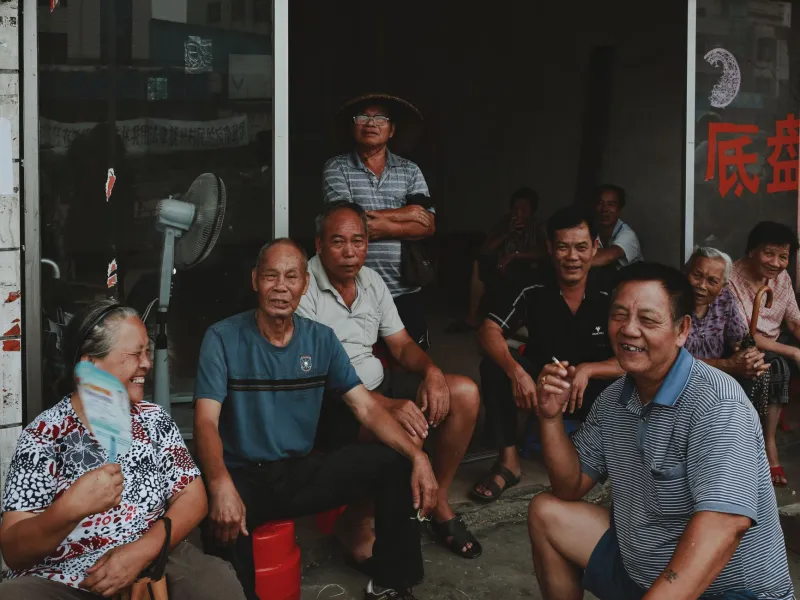
Drive through McCallsburg on any given Tuesday afternoon and you'll probably see someone waving at a passing truck, a front porch conversation that's been going on for forty-five minutes, or a casserole dish moving between houses. It's the kind of thing that's easy to dismiss as small-town quaintness — a relic of a slower era. But researchers who study community cohesion say what's happening here is actually something pretty rare, and increasingly, something the rest of the country is desperately trying to figure out how to replicate.
So what exactly is going on in McCallsburg? And why does it work?
The "Everybody Knows" Factor — And Why It's a Feature, Not a Bug
In bigger cities, anonymity is often sold as a perk. Nobody in your business. Nobody tracking your comings and goings. But social psychologists have been making the case for years that this kind of invisibility comes with a hidden cost — a creeping sense of disconnection that's become something of a public health crisis across the United States.
McCallsburg operates on the opposite principle. When you live somewhere with a population that fits inside a mid-sized high school gymnasium, you are, by definition, visible. Your wins get celebrated. Your hard times don't go unnoticed. And that visibility, as uncomfortable as it can feel sometimes, creates what researchers call "social accountability" — the sense that your actions have weight because they exist within a web of relationships that actually matter.
Long-time resident Darlene Hoffmeister, who's lived here for over fifty years and raised four kids on the same street where she grew up, puts it plainly: "You can't have a bad day and disappear into the crowd here. But the flip side is, you also can't have a bad day alone. Someone's always going to notice and show up."
That showing up — whether it's a meal on the doorstep after a surgery or a neighbor who just happens to swing by with an extra set of hands during harvest — is the heartbeat of McCallsburg's social fabric.
What Newcomers Notice First
Not everyone here was born here, and the perspective of people who chose to plant roots in McCallsburg after living elsewhere offers a useful outside lens.
Trevor and Annika Solveson moved from the Des Moines metro area about six years ago, initially unsure whether small-town life would stick. Trevor laughs remembering their first week. "We hadn't even finished unpacking and two different families had already dropped off food. I didn't know if I should be touched or a little freaked out."
They stayed. And what kept them, Annika says, was realizing that the warmth wasn't performative. "In bigger places, community is something you have to really seek out and build deliberately. Here, it's just... ambient. It's already there. You just have to be willing to participate in it."
That observation tracks with what sociologists call "passive social infrastructure" — the idea that certain environments make connection the default rather than the exception. Small towns, when they're functioning well, build that infrastructure naturally through shared spaces like local diners, grain elevators, school events, and churches. McCallsburg has all of those, and residents use them.
The Psychology of Staying (and Coming Back)
One of the most telling signs of a community's health is how many people who leave actually return. McCallsburg has a quiet but steady stream of folks who went off to college or careers in bigger cities and eventually found their way back — sometimes with spouses and kids in tow who'd never set foot in Iowa before.
What pulls them back isn't just nostalgia, though that's certainly part of it. It's something more practical: the recognition that the kind of life they actually want — rooted, meaningful, low on friction — is more achievable here than almost anywhere else they looked.
Jamie Eckhardt came back after nearly a decade in Chicago. He's been back for three years now and runs a small repair business out of his garage. "I had more 'connections' in Chicago than I could count," he says, making air quotes. "But I didn't have community. There's a difference. Here, if something goes sideways, I've got twelve people I can actually call. Not text. Call."
That distinction — between networking and genuine mutual reliance — is one that researchers studying social resilience keep coming back to. Communities with high levels of what's called "bonding social capital" (deep, trust-based relationships among residents) consistently outperform larger, more diffuse communities when it comes to bouncing back from hardship, whether that's economic downturns, natural disasters, or just the ordinary grind of difficult times.
Resilience Isn't an Accident
McCallsburg's ability to weather hard seasons — and agricultural communities know hard seasons intimately — isn't luck. It's the direct result of a culture that has, over generations, built the habit of mutual aid into its DNA.
When a family loses a crop to a bad storm, people show up. When someone's dealing with a health crisis and can't keep up with the farm, the community figures out a solution. It's not organized through an app or a formal nonprofit structure. It just happens, because the relationships that make it possible have been cultivated over years of showing up for each other in smaller ways.
That's the part that's hard to export to bigger communities, and it's worth being honest about that. You can't manufacture decades of shared history overnight. But McCallsburg's model does offer a blueprint of sorts: invest in the small moments of connection, use shared spaces consistently, and resist the urge to privatize every aspect of daily life.
What McCallsburg Can Teach the Rest of Us
None of this is to say that small-town life is without its challenges. Privacy can feel scarce. Opportunities in certain fields are limited. And the social pressure that comes with visibility can cut both ways. People here will tell you that themselves.
But in an era when loneliness has been declared a public health epidemic, when trust in institutions is at historic lows, and when people are actively searching for meaning and belonging, McCallsburg represents something genuinely worth paying attention to.
The secret ingredient isn't some mysterious quality baked into the Iowa soil. It's something far more transferable: the daily, unglamorous practice of choosing to be present in each other's lives. Of waving at the passing truck. Of staying on the porch a little longer. Of noticing when someone hasn't been around in a while.
That's the McCallsburg model. And honestly? It's not complicated. It's just rare.